Dziennik Gazeta Prawna Ranking: MDDP again among Poland’s leading tax advisory firms
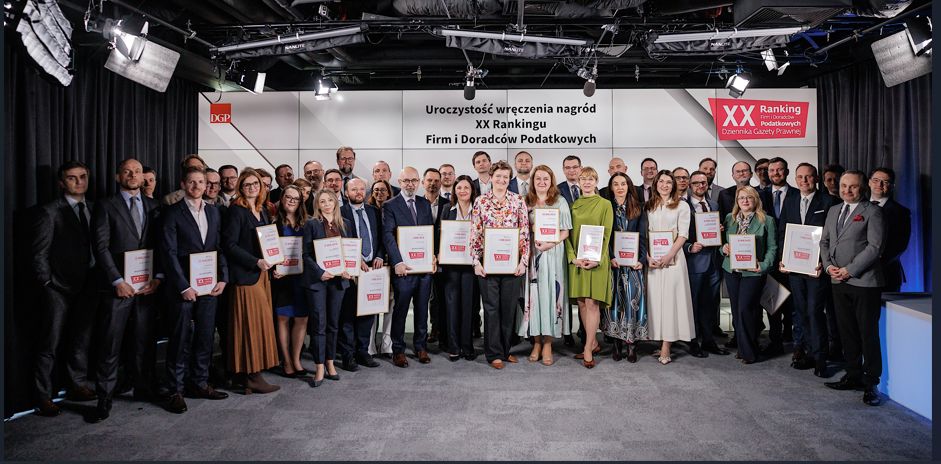
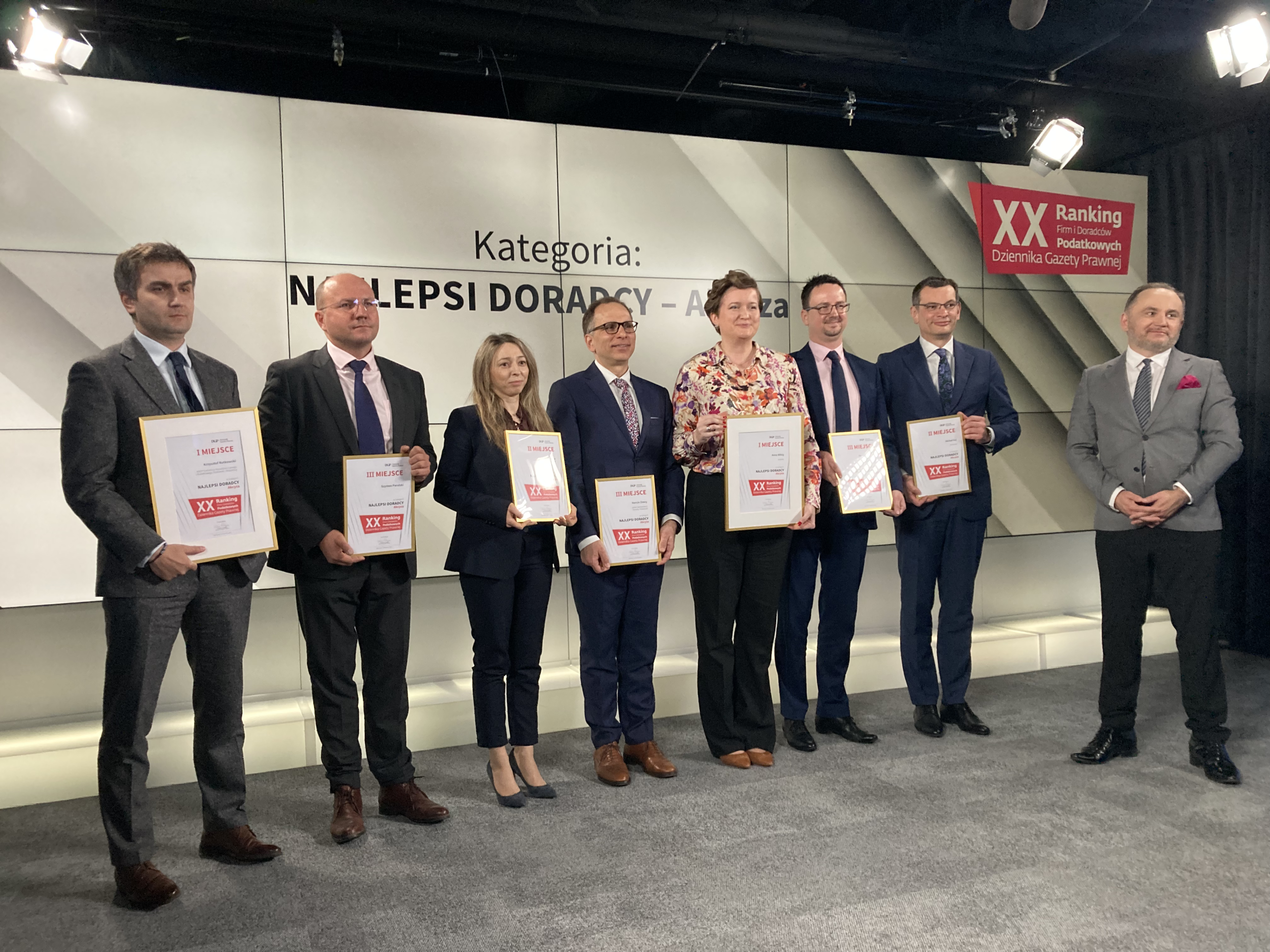
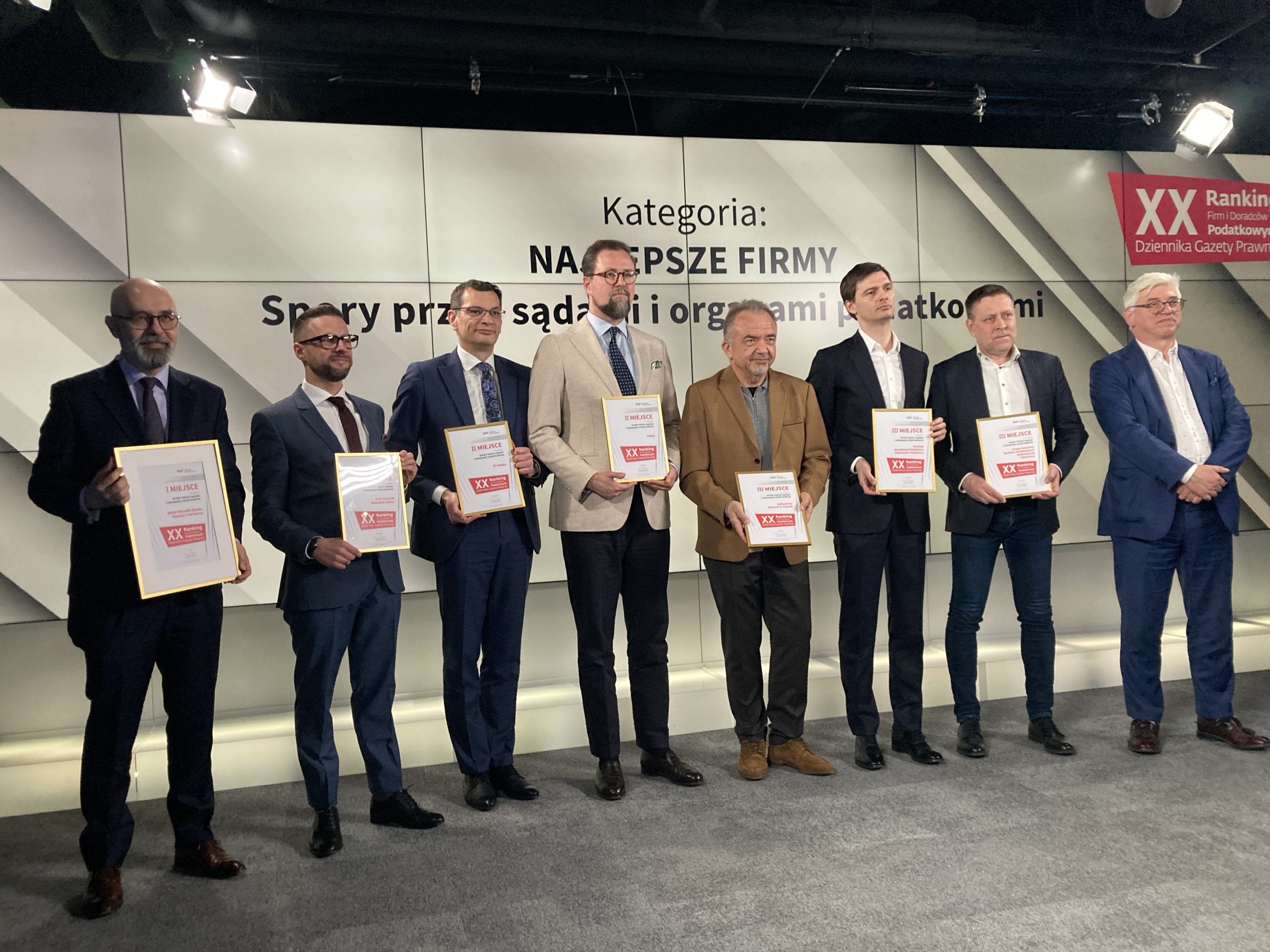
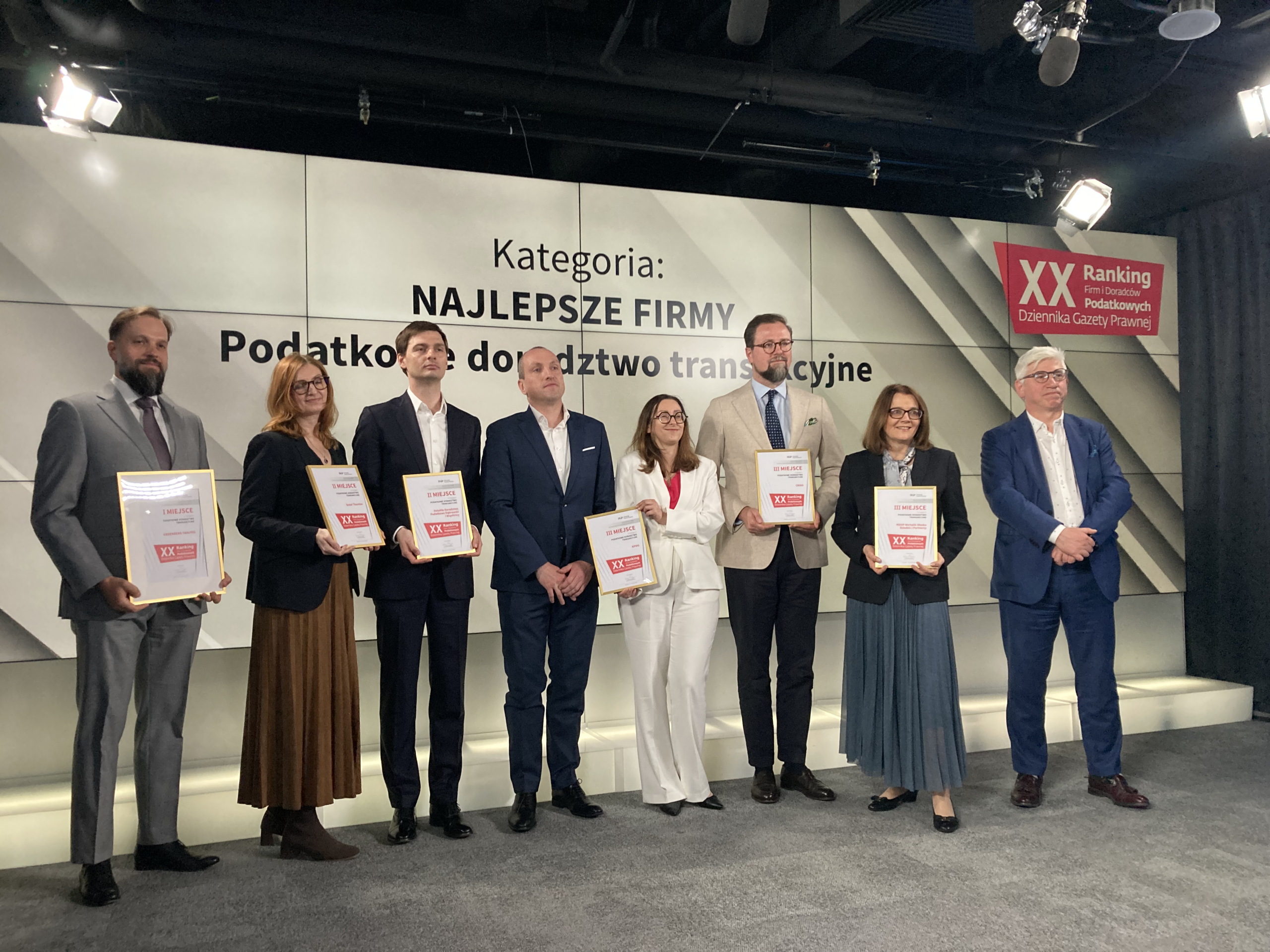
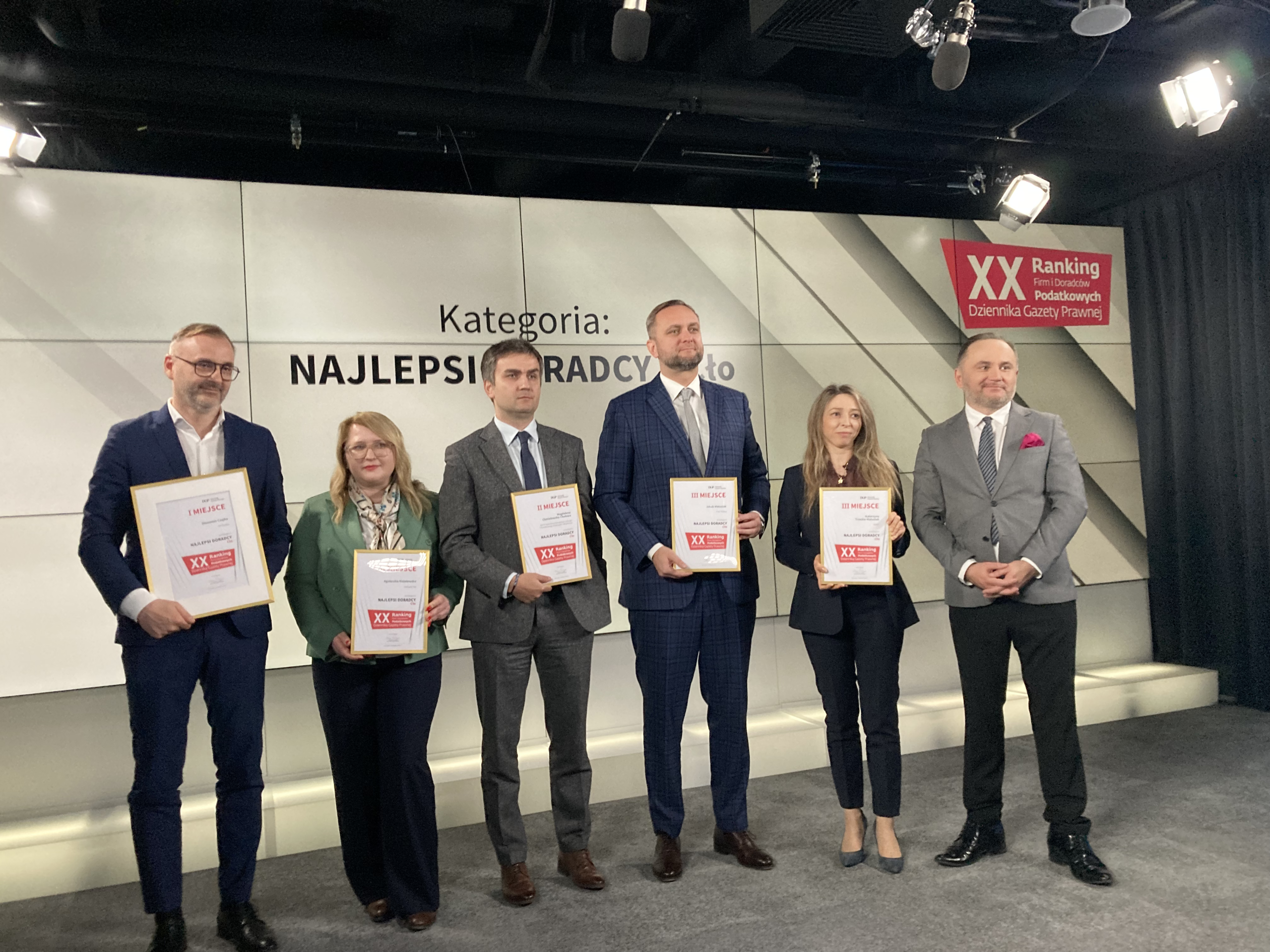
We are pleased to announce that MDDP has been recognized in the latest 20th Ranking of Tax Advisory Firms and Tax Advisors published by Dziennik Gazeta Prawna.
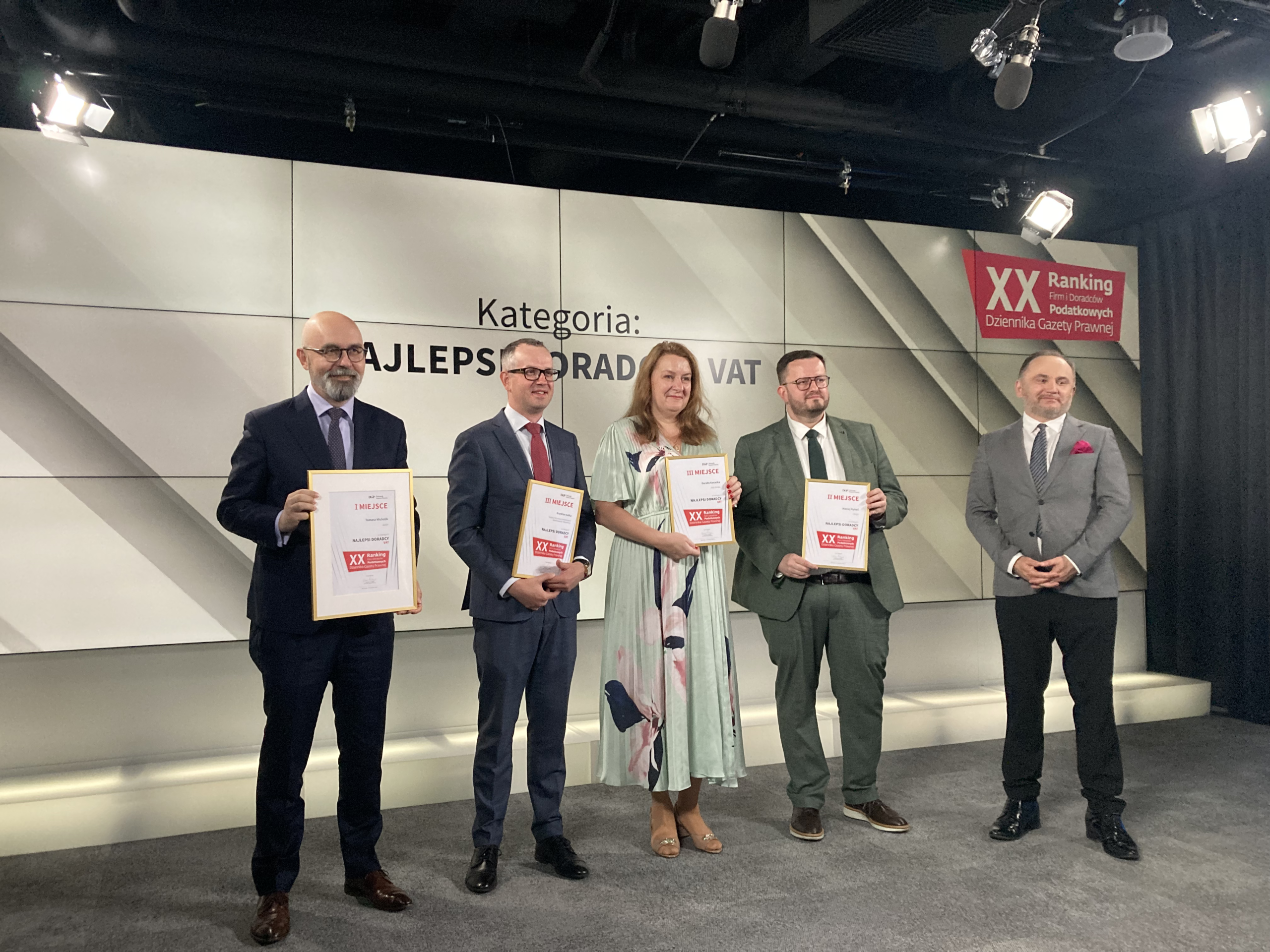
Tomasz Michalik named best advisor in VAT
Tomasz Michalik represented the taxpayer in one of the most significant Polish tax cases of recent years heard by the Court of Justice of the European Union. The proceedings concerned a fundamental VAT issue: whether spouses subject to statutory community property may be treated as a single VAT taxpayer (CJEU judgment in Case C-213/24, Grzera).
The case reached the CJEU through preliminary questions referred by the Provincial Administrative Court in Wrocław. The first question concerned the taxation of the sale of plots of land. In light of the Court’s existing case law, that issue did not raise major doubts, since such a transaction is, in principle, subject to VAT. In reality, however, it was only the starting point for resolving a much broader and more consequential problem.
The second preliminary question was of greater importance. It concerned taxpayer status in the sale of real estate covered by statutory marital community property. The dispute came down to whether each spouse should be regarded as a separate VAT taxpayer, or whether both spouses together should be treated as a single entity. The particular importance of this issue stemmed from the fact that neither spouse may independently dispose of property subject to community property, or of a share in it, without the consent of the other.
In its judgment, the CJEU held that in such circumstances the VAT taxpayer is not each spouse individually, but the spouses treated jointly. This means that, for VAT purposes, the marriage as a single entity should be registered in connection with this type of transaction. All tax consequences, including the right to deduct input VAT, should likewise be attributed to that same entity.
The significance of this ruling extends beyond Polish practice and also has an EU-wide dimension. In Poland, the judgment marks a departure from the tax authorities’ long-established approach of attributing the sale of real estate separately to each spouse, generally in the amount corresponding to one half of the transaction. It cannot be ruled out that the ruling will also affect cases already concluded by decisions issued against individual spouses.
Tomasz Michalik also represented taxpayers in disputes concerning VAT penalties. In one such case, the Provincial Administrative Court in Warsaw, in its final judgment of 6 November 2025 (case file III SA/Wa 1180/25), confirmed that there were no grounds for imposing an additional tax liability on the company. The proceedings concerned the settlement of a corrective invoice in the wrong reporting period.
According to the tax authority, output tax had been understated for one of the months, which formed the basis for imposing a penalty of 10% of the alleged shortfall. The court did not share that assessment. It held that the case concerned only an incorrect allocation of the settlement to a reporting period, rather than an actual tax shortfall. At the same time, it indicated that applying a penalty in such circumstances would be disproportionate.
In the court’s view, VAT penalties should serve to protect the proper collection of tax and combat abuses, rather than punish taxpayers for purely technical settlement errors. The ruling is an important argument in disputes concerning the limits of imposing additional tax liabilities.
Tomasz Michalik also took part in other proceedings concerning the mitigation of VAT penalties. These cases related to accounting errors, including those involving the application of a tax rate or the determination of the proportion for input VAT deduction. However, already at the appeal stage it was possible to achieve a significant reduction in the penalties imposed by the tax authorities, and in some cases to reduce them to a symbolic level.
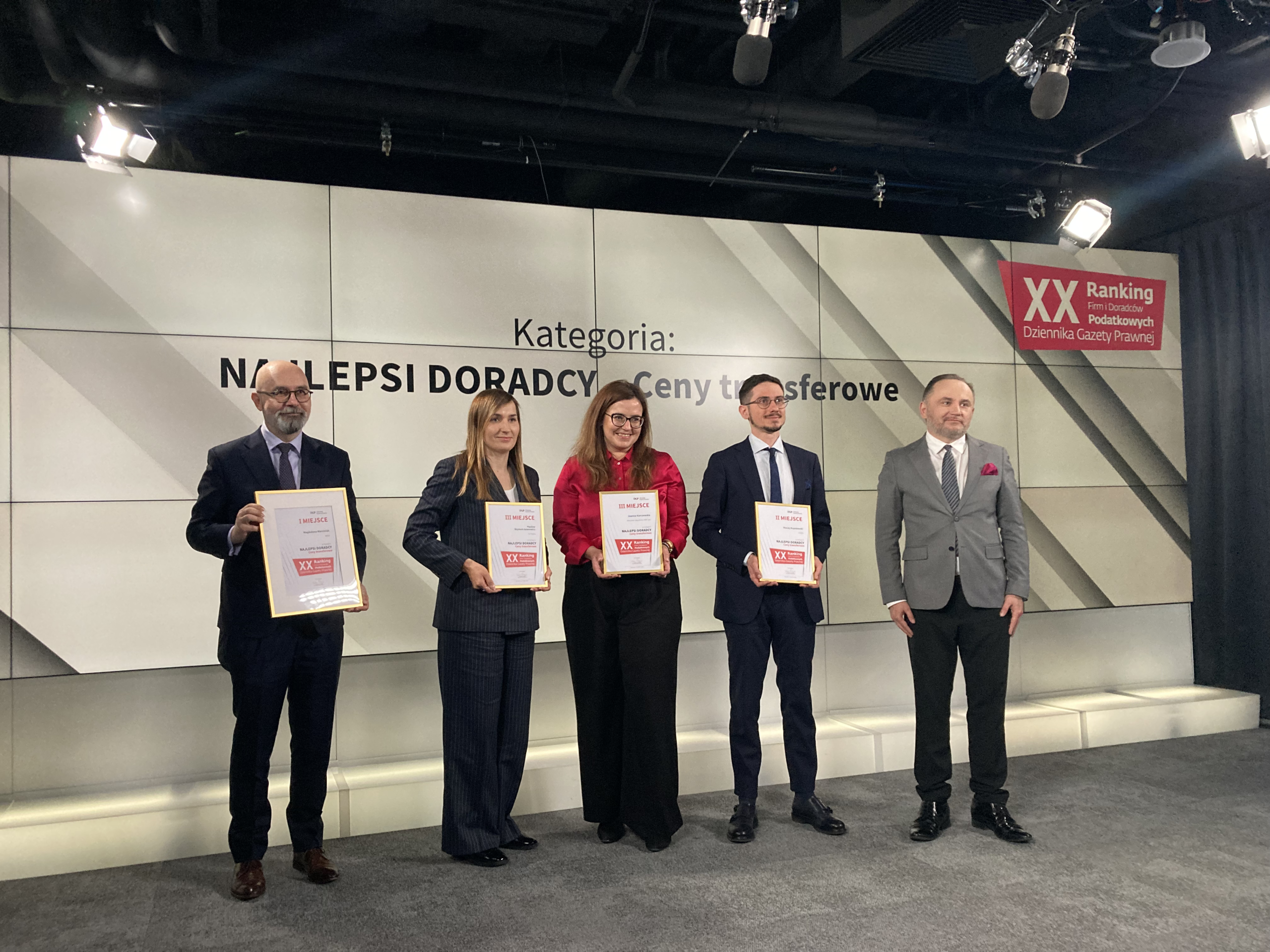
Magdalena Marciniak named best advisor in transfer pricing
Magdalena Marciniak led numerous complex transfer pricing projects for multinational corporate groups. One of the most important was a comprehensive redesign of the settlement model for guarantees and financing within a group operating in the infrastructure sector. The work included adapting the settlement rules to the group’s current financing model, as well as to the functions actually performed by the individual entities. A particular challenge was to develop a solution for a structure involving several companies acting simultaneously as guarantors, beneficiaries of guarantees, and entities bearing financing costs and recharging them further.
She also advised on one of the first projects in Poland to analyze the impact of transfer pricing regulations on the operation of the deposit-return system in the packaging recycling industry. The work focused on assessing service transactions related to packaging waste management and verifying whether the cooperation model among system participants remained consistent with the arm’s length principle.
Magdalena Marciniak also represented a taxpayer during a customs and tax audit concerning the arm’s length nature of settlements in the food sector. During the proceedings, the tax authorities challenged the level of profitability achieved on sales of goods and considered a multi-million income adjustment. In response, detailed benchmarking analyses were presented, together with arguments relating both to the method used to test arm’s length conditions and to the proper selection of a statistical measure. Ultimately, the authority accepted an approach based on a wider range of results and confirmed that the profitability achieved fell within arm’s length boundaries. The case also demonstrated an innovative approach to the use of statistical measures and confirmed that in transfer pricing practice there is no single universal measure applied automatically.
Rafał Kran named best advisor in local taxes and fees
Rafał Kran played a significant role in a case concluded by a landmark judgment of the Court of Justice of the European Union concerning real estate tax (CJEU judgment of 29 April 2025, Case C-453/23). This was the first CJEU ruling to address Polish real estate tax directly. The Court confirmed that the tax exemption provided for private railway sidings does not constitute unlawful State aid, which in practice meant that there were no grounds for the tax authorities to challenge that exemption. The importance of the judgment goes beyond the railway infrastructure sector itself, as it confirmed the broad discretion of Member States in shaping tax preferences in the area of non-harmonized taxes.
Following the judgment, Rafał Kran handled numerous overpayment proceedings concerning railway infrastructure in many municipalities. The CJEU’s ruling gave taxpayers a real basis for seeking refunds of overpaid tax, and tax authorities began to grant the submitted applications.
Among Rafał Kran’s important achievements was also conducting a series of overpayment proceedings concerning the application of the preferential real estate tax rate to residential buildings owned by businesses and intended for residential purposes, including in the private institutional rental sector. These efforts resulted in many taxpayers obtaining refunds of overpaid tax. The line of case law developed in this area also contributed to greater consistency in the application of rules governing the taxation of property used for residential purposes.
Bartosz Głowacki recognized advisor in CIT
In 2025, Bartosz Głowacki focused on complex CIT projects and disputes, particularly those involving restructurings, family foundations, and the classification of taxable income. One of the most important achievements was a precedent-setting case concluded by the Supreme Administrative Court’s judgment of 23 September 2025 (II FSK 580/25), concerning the merger of companies without the issuance of shares. The court confirmed that in the case of a simplified merger there are no grounds for recognizing income on the part of the acquiring company, and the ruling had systemic significance for restructurings within corporate groups. Bartosz Głowacki handled the case together with Aleksandra Szymańska and Jakub Sobczak.
Another significant achievement was a precedent-setting case concerning the classification of income from sublicensing intellectual property rights. The administrative courts confirmed that such income should not automatically be classified as capital gains; rather, its classification should take into account the taxpayer’s actual business model. The outcome of the proceedings was not only favorable case law, but also a new individual tax ruling confirming that such income may be recognized as income from other sources. Bartosz Głowacki handled this case together with Konrad Medoliński and Paweł Wyciślik.
In the area of transactional and restructuring advisory, Bartosz Głowacki also carried out a multi-stage, cross-border project to change an ownership structure using a Polish family foundation. The work involved designing and implementing the transfer of shares held by a foreign holding company to a family foundation seated in Poland, while ensuring the tax security of the entire structure and maintaining continuity of ownership control. He also led a project involving the development of the most advantageous model for carving a subsidiary out of a group, including a comparative analysis of possible restructuring options and their tax consequences.
In the area of withholding tax, Bartosz Głowacki handled WHT refund proceedings in cases requiring in-depth treaty analysis and proof of beneficial owner status. In one of the key cases, he recovered nearly PLN 2 million of tax withheld on royalty payments made by a Polish company, confirming the possibility of applying the reduced 5% rate under a double taxation treaty. In addition, the refund obtained confirmed that, in certain cases, partnerships may also benefit from treaty protection. In another proceeding, he recovered more than PLN 300,000 of WHT withheld on remuneration paid to a Philippine service provider, demonstrating that the payments constituted business profits which – absent a permanent establishment in Poland – are not taxable in Poland.
Katarzyna Trzaska-Matusiak recognized advisor in excise duty
Katarzyna Trzaska-Matusiak was recognized for her excise advisory work, particularly on projects requiring a combination of expert regulatory knowledge and a practical approach to new business models. One of the most interesting undertakings was comprehensive excise advice for energy storage projects. The matter concerned the development of the correct excise settlement model for electricity during the technological start-up period of an energy storage facility, when the installation was ready for operation but its owner had not yet obtained the required storage license. The project required a detailed analysis of risks and tax effects associated with several alternative cooperation models. The result was a practical solution aligned with the realities of the rapidly developing energy storage market.
Another important project was comprehensive advice on alcohol excise stamp labeling in a cross-border business model involving Poland and Germany. The matter concerned determining excise obligations connected with the intra-Community acquisition of alcoholic products and their marking with excise stamps in a situation where ownership of the goods and the status of the excise taxpayer were split between different entities. The key challenge was to determine precisely which participant in the structure was responsible for ordering, paying for, collecting, and transferring the stamps. The analysis carried out confirmed the correct settlement and responsibility model, which was of material importance for the tax security of the entire undertaking.
Katarzyna Trzaska-Matusiak also took part in a breakthrough dispute concerning the excise taxation of so-called “crew cab” vehicles, i.e. vehicles with a double row of seats. The case ended with the repeal of earlier adverse decisions and the confirmation of an excise overpayment exceeding PLN 1 million under a self-review procedure, which remains a solution rarely seen in the practice of the tax authorities. The project required the preparation of in-depth arguments based both on a technical analysis of the vehicles and on changes in the interpretation of the rules resulting from the Explanatory Notes to the Combined Nomenclature. In this case, she worked together with Jakub Warnieło and Aleksandra Bulaszewska.
Katarzyna Trzaska-Matusiak recognized advisor in customs
Katarzyna Trzaska-Matusiak was recognized for her customs advisory work, particularly in matters requiring in-depth knowledge of tariff classification, customs regulations, and administrative practice. She specializes in advice covering tariff classification of goods, determination of customs value, origin of goods, and the application of customs procedures. She supports clients both in day-to-day advisory work and in projects relating to imports, exports, and supply chain reorganizations.
One of the more important projects carried out by Katarzyna Trzaska-Matusiak was customs advice for an energy company engaged in two-way trade in electricity between Poland and Ukraine. The project concerned ensuring the proper handling of import and export processes for electricity as goods transmitted through fixed transmission installations, in accordance with the Union Customs Code and implementing regulations on customs declarations. Of key importance was the analysis of documentation concerning the origin of electricity in the context of sanctions risks, including an assessment of whether the purchase of electricity on the Ukrainian exchange excluded the possibility of origin in sanctioned areas. The model developed allowed the client to manage cross-border electricity flows safely and lawfully and to identify properly the risks related to customs settlements.
Another important project involved advice in a dispute concerning the tariff classification of imported smartbands, i.e. intelligent fitness wristbands. The customs authorities considered that, as multifunctional devices, they should be classified as watches, which would have resulted in increased customs duties and an upward VAT adjustment. A key element of the project was demonstrating that the dominant function of these devices is monitoring physical activity and health parameters, rather than telling time. At the same time, arguments were prepared against the retroactive reclassification of the goods, indicating that tariff classification should be made on the basis of the rules in force on the date the customs debt arose.
The arguments adopted were based not only on customs law provisions, but also on the manufacturer’s documentation, market realities, and classification practice within the European Union. The case was of major practical importance, as it concerned protecting the entrepreneur against a retroactive change in the authorities’ approach and confirming that the tariff classification of modern multifunctional devices should take into account their actual, dominant function.
MDDP ranked best firm in the category of disputes before courts and tax authorities
DGP recognized MDDP for breakthrough cases conducted before the CJEU, administrative courts, and tax authorities, concluded with rulings significant not only for the firm’s clients but also for the practice of applying tax law in Poland and across the European Union.
- MDDP advisors secured a precedent-setting CJEU judgment in Case C-213/24, Grzera, concerning the VAT treatment of the sale of real estate covered by statutory marital community property. The Court confirmed that in such circumstances the VAT taxpayers are the spouses acting jointly, rather than each of them separately. This ruling is groundbreaking across the EU and marks a departure from the long-standing practice of tax authorities attributing one half of the sale to each spouse. (Tomasz Michalik served as the taxpayer’s representative before the CJEU. Mirosława Zachar was the second representative, and Marek Przybylski and Dominika Woroszyło also participated in the case.)
- MDDP advisors also obtained a favorable CJEU judgment of 29 April 2025 in Case C-453/23, concerning the real estate tax exemption for private railway sidings. This was the first CJEU ruling to address Polish real estate tax directly. The Court confirmed that the exemption does not constitute unlawful State aid, which is important not only for owners of railway infrastructure but, more broadly, for the assessment of the legality of domestic tax preferences in non-harmonized taxes. (The client was represented by Rafał Kran and Monika Dziedzic.)
- MDDP experts are also representing a client in Case T-689/24, the first Polish tax case before the General Court of the European Union following the reform of the EU judiciary. The dispute concerns the compatibility with Directive 2006/112 of Polish rules making the timing of VAT deduction dependent on receipt of an invoice. The case may be of significant importance for taxpayers across the European Union. (The taxpayer is represented by Tomasz Michalik and Jakub Warnieło.)
DGP also took into account MDDP’s most important wins before the administrative courts:
- MDDP advisors secured a precedent-setting judgment of the Supreme Administrative Court of 18 February 2025 (II FSK 878/23), confirming the possibility of retroactively correcting a statement on the choice of the method for accounting for foreign exchange differences. The ruling is significant not only for CIT and PIT taxpayers but also more broadly—the Supreme Administrative Court confirmed that, as a rule, declarations of intent made in tax returns may also be corrected. (The representatives in this case were Paweł Mazurkiewicz, Jakub Warnieło, and Bartosz Doroszuk.)
- MDDP advisors also obtained the first final Supreme Administrative Court judgment in Poland challenging the tax authorities’ discretion in serving documents on attorneys via the e-Tax Office (II FSK 895/25). The Supreme Administrative Court confirmed that the address for service indicated in the power of attorney is binding on the tax authority, which may have significant consequences for the validity of service and the running of procedural deadlines in many proceedings. (The representatives in this case were Jakub Warnieło, Marta Klepacz, and Aleksandra Bulaszewska.)
- Another important success for MDDP was the final judgments of the Provincial Administrative Court in Warsaw of 30 July 2025 (III SA/Wa 878/25 and III SA/Wa 877/25), in which the court confirmed the need to take into account the EU principle of proportionality when applying rules on tax interest. The court held that the State Treasury should not be entitled to interest for a period during which there was no actual underpayment of tax. (The representatives in this case were Tomasz Michalik and Jakub Warnieło.)
- Also noteworthy is the final judgment of the Provincial Administrative Court in Warsaw of 6 November 2025 (III SA/Wa 1180/25), in which the court confirmed that there were no grounds for imposing a VAT penalty where there had merely been an incorrect allocation of tax between reporting periods, rather than an actual shortfall. The court also stressed that imposing a penalty in such circumstances would be contrary to the principle of proportionality. (The representatives in this case were Tomasz Michalik and Jakub Warnieło.)
DGP also took into account the successes of MDDP advisors in effective appeals to the second-instance authority, which made it possible to avoid further court disputes:
- MDDP advisors obtained confirmation of an excise overpayment relating to so-called “crew cab” vehicles. Thanks to an effective appeal and arguments based on a technical analysis of the vehicles and changes in the Explanatory Notes to the Combined Nomenclature, the authority, acting under a self-review procedure, set aside its earlier adverse decisions and confirmed an excise overpayment exceeding PLN 1 million. (The project was carried out by Jakub Warnieło, Aleksandra Bulaszewska, and Katarzyna Trzaska-Matusiak.)
- MDDP advisors also successfully recovered a WHT refund in relation to payments to a Cypriot entity. The second-instance authority set aside the unfavorable decision, and a subsequent decision confirmed a tax refund in the amount of several million zlotys. Achieving such an outcome already at the appeal stage was exceptional, especially in cases concerning payments to jurisdictions subject to heightened scrutiny by the authorities.
Recognition in the category of transactional tax advisory and restructurings
In 2025, MDDP confirmed its strong position as a tax advisor in the real estate market, particularly in the PRS and PBSA sectors. The team advised on four significant transactions involving the sale of projects and shareholdings, as well as acquisitions of land for new investments.
MDDP supported, among others, the BaseCamp group in the sale of the BC Wrocław Sienkiewicza property and the PBSA project on Ciołka Street in Warsaw. The scope of work included tax structuring of the transaction, analysis of documentation, mitigation of tax risks, and VAT issues related to leasing. The team also advised the LifeSpot group on the acquisition of land in Warsaw for a development comprising more than 500 units, and participated in the sale of a rental housing platform to an investor backed by German capital. The work was coordinated by Justyna Bauta-Szostak.
MDDP also advised on important transactions in the Warsaw office market, providing comprehensive tax support in the sale of prestigious commercial assets.
One of the most important projects was the sale of the VIBE A office building by Ghelamco to Manova Partners – one of the largest office transactions in the CEE region in 2025. MDDP was responsible for full tax support, including preparing transaction documentation and obtaining tax rulings. The work was led by Katarzyna Kozakowska with support from Anna Wnuczek. At the same time, the team advised on the sale of a service-and-office property in Warsaw’s Wilanów district and on a transaction concerning an office building in the area of Daszyńskiego Roundabout. Among those involved in these projects were Katarzyna Kozakowska, Dariusz Fistek, and Agnieszka Ośka.
MDDP supported the Adventum Group in a complex transaction involving the acquisition of four industrial properties in a sale-and-leaseback structure, with a total leasable area of approximately 185,000 sq m. The project required coordination of several parallel transactions, preparation of documentation, and securing the tax effects of a multi-faceted sale-and-leaseback structure.
The MDDP team provided comprehensive tax advice at every stage of the project – from negotiating and reviewing documentation to obtaining tax rulings and providing support through to completion of the transaction. Among those involved in the project were Paweł Goś, Rafał Kran, Justyna Adamska, and Natalia Markowska.
The total value of the real estate transactions on which MDDP advised in 2025 exceeded PLN 1 billion.
We would like to thank our Clients for their trust, and the entire MDDP team for this shared success.